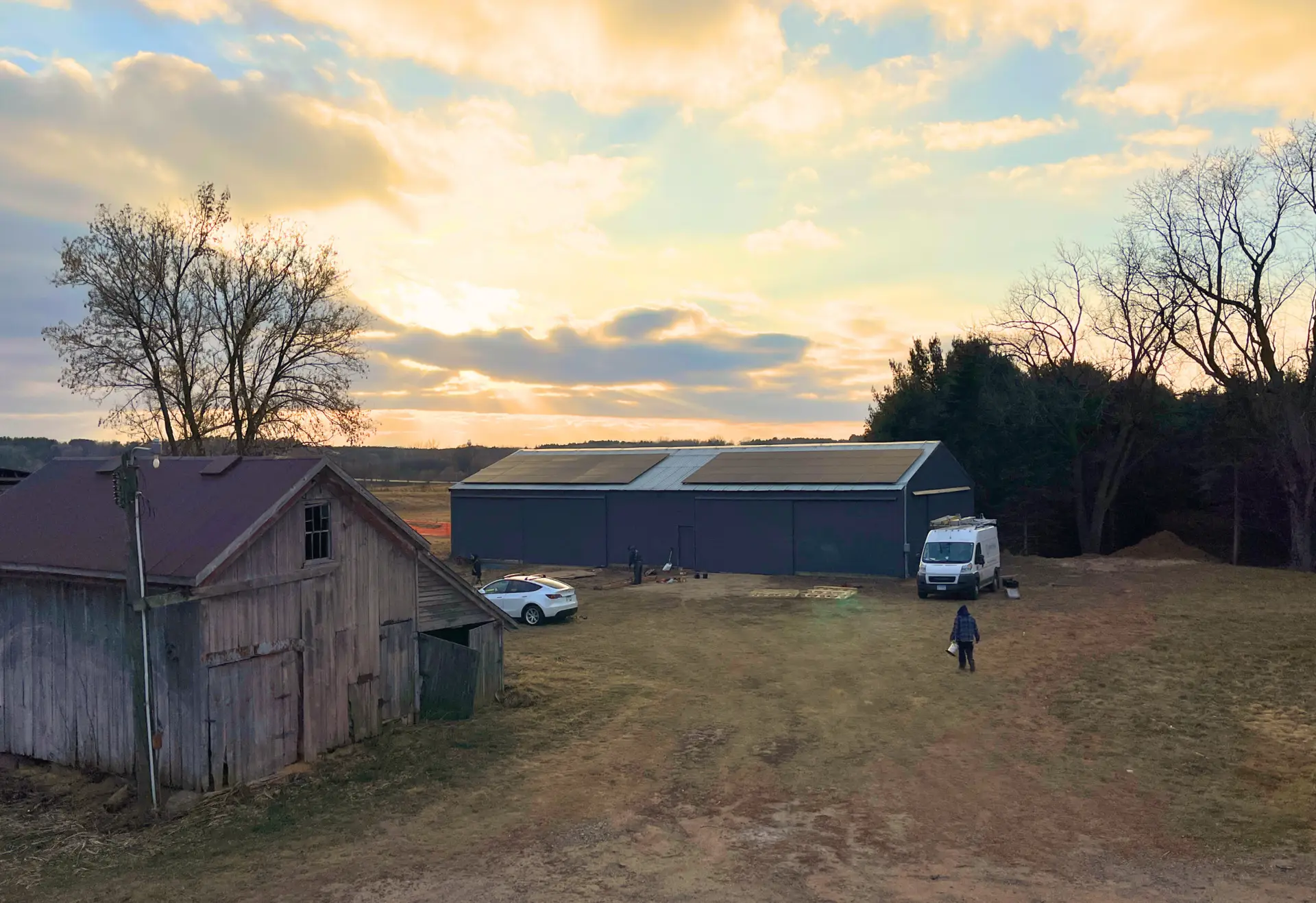
Summary: Solar in agriculture is helping farms reduce high operating costs while improving energy reliability and long-term sustainability. With incentives like USDA REAP grants and flexible ground-mounted systems, agricultural operations can achieve strong ROI and greater energy independence.
Farming is undergoing a tech revolution. Precision farming, advanced irrigation systems, and processing and storage equipment all run on electricity, not to mention your barns and other outbuildings. The energy it takes to run all of this technology is substantial and takes a sizeable bite out of a farm’s bottom line.
This is why more farmers and agribusinesses are turning to solar energy to meet their electricity needs. Not only does going solar reduce your expenses, it also improves resilience so you can gain greater control over your operation.
Growing Energy Demands of Modern Farming
Successful farming today relies on a wide range of energy-dependent systems, including irrigation pumps and water management systems, grain drying and handling equipment, livestock ventilation and climate control, dairy equipment, and refrigeration and cold storage.
Often, you’re using these systems most during peak hours when electricity is most expensive. This leaves agribusinesses vulnerable to rising utility rates. Increased reliance on powered equipment can leave your operation at risk of power outages that cause disruptions, damage or destroy products, and increase costs. Going solar solves these risks with clean, predictable power that reduces your reliance on the grid.
Go Solar in Agriculture to Lower Your Operating Costs
Installing a solar energy system at your operation allows you to generate your own electricity and reduce the amount of electricity you require from the grid (or eliminate it altogether). This directly affects both your monthly bills as well as your long-term energy costs, including:
- Lower monthly electricity bills due to less reliance on the utility grid to provide power.
- Protection against rising energy prices, because you’re making your own electricity, not purchasing it from your utility provider.
- Improved long-term cash flow because you’re spending less on electricity.
- Predictable energy costs for budgeting, again, because you are making your own electricity and not buying it.
If you’re like most farming operations and use large of amounts of daytime electricity, you are likely well-positioned to maximize solar production, offset your high energy demands, and save month-to-month and year-to-year.
Go Solar to Improve Resilience and Energy Independence
Going solar in agriculture eliminates the risks of relying on grid energy to power your operation. Energy reliability is critical in agriculture, and solar energy systems, especially those with battery storage, can help you stay up and running continuously.
TruNorth Solar works with you to design a solar energy system that maintains your essential operations, even after severe weather or when your grid-reliant neighbor has gone dark. Your equipment, inventory, and products will be protected and you can continue to operate your farm without interruption.
Affording Your Farm’s Solar Energy System
You see the benefits of going solar. Now, let’s take a look at how you can make it happen. In addition to loans, the USDA Rural Energy for America Program (REAP) grant program can help you reduce the upfront costs of installing a solar energy system at your operation. A REAP grant can cover a portion of installation costs and guarantee your loan to improve your financing options.
With a REAP grant and the right financing product, you can improve your return on investment over the life of your system. Many ag solar projects can pay for themselves over time, generating value long after you’ve covered your initial costs.
Solar energy is a powerful tool for modern agribusinesses. Not only can you save costs, you can use your solar energy system to make your operation more resilient. By working with a local team like TruNorth Solar, you can make sure your investment in solar is affordable and designed to meet your needs now and in the future.
We’d love the opportunity to help you operate more efficiently and independently. Get in touch with our team today to schedule a professional assessment of your energy needs, evaluate your property, and identify ways to offset the upfront costs.
Solar in Agriculture FAQs
What types of farm operations benefit most from solar energy?
Energy-intensive operations such as irrigation, grain drying, dairy production, and cold storage benefit the most because they consume large amounts of electricity that solar can offset.
What is the USDA REAP program?
The USDA Rural Energy for America Program (REAP) provides grants and loan guarantees to help farmers and rural businesses invest in renewable energy systems like solar.
Why are ground-mounted solar systems popular on farms?
Farms often have open land, making ground-mounted systems ideal for optimal placement, easier maintenance, and the ability to scale the system over time.
How does solar improve farm resilience?
Solar systems, especially when paired with battery storage, can help maintain critical operations during power outages and reduce dependence on the grid.