
Summary: For Minnesota homeowners, home battery backup energy storage is more than a convenience. It’s a smart layer of protection. TruNorth Solar covers what a home backup system does, what it can power, what it costs, and why it makes especially good sense here in the North Star State.
FLASH! BOOM! POP! It’s a spring storm, and the power’s out. Does your home go dark, or are you popping popcorn and watching a movie on the couch while your sump pump keeps your home dry through the deluge?
If you invest in battery storage for your solar energy system, your home stays powered, even when the grid goes down. Batteries store energy from your panels so you can use it when you need it most, whether it’s during a storm, at night, or when utility rates peak.
Let’s take a look at what home backup systems do and why they make good sense for many Minnesota homeowners.
Less Dependence on the Grid
Solar panels only generate electricity when the sun’s out. With battery storage, you can save the excess energy your panels generate to use when the sun goes down. Instead of relying on the grid’s fossil fuel energy as a backup, you can use your own renewable energy.
What’s more, with net metering, you can choose to send any extra power you don’t need back to your utility company for credits on your energy bill.
More Peace of Mind
In Minnesota, our weather doesn’t give us much warning. Did you know Minnesotans experience some of the longer average power interruption durations in the Midwest? Ice storms in October, derecho winds in June, and blizzards in January can knock out power for days.
A home backup system keeps your essentials running when the grid is down. It kicks in seamlessly so you experience minimal or no downtime. For households with medical equipment, young kids, or elderly family members, battery storage for your solar energy system keeps everyone safe, healthy, and comfortable, no matter the weather.
Keep the Essentials Powered
Why do you want to stay up and running during a power outage? Do you want to cover the essentials, such as the lights, refrigerator, internet router, and sump pump? Or, do you want your entire home protected, including the furnace, air conditioning, and your EV charger or induction cooktop?
When TruNorth Solar designs your battery storage, we’ll walk through what matters most to you and size your system accordingly. There’s no one-size-fits-all answer to the battery storage question.
If you’re curious, here’s how much approximate power common appliances draw. This can help you get an idea of the size of the system you may need:
- Refrigerator: 150 watts
- 10 LED lightbulbs: 100 watts
- Sump pump: 800–1500 watts
- Well pump: 750–2000 watts
- Electric furnace blower: 500–1500 watts
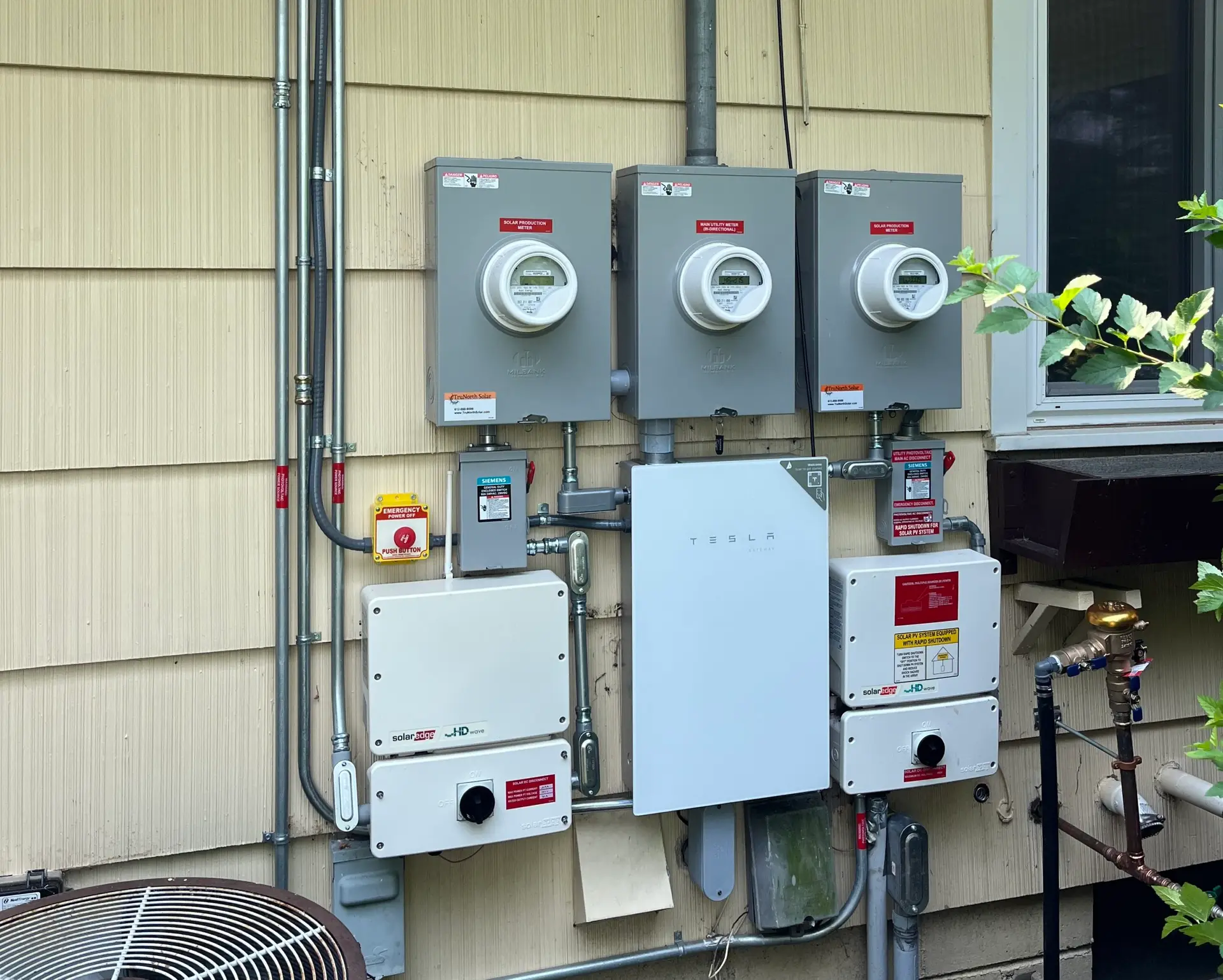
A single Tesla Powerwall, for example, holds 13.5 kilowatt-hours of usable energy. A modest household running essential loads only could depend on a single Powerwall to get through the night, before the sun comes out on the following day and recharges it.
Questions to Ask Yourself About Home Battery Backup
Wondering if a home backup battery system is right for your solar energy system? Here are few questions to ask yourself.
- Have you experienced outages in the past few years?
- Do you have essential loads (medical equipment, etc.) that can’t go down?
- Do you already have solar or are you planning to go solar?
- Do you want greater energy independence?
You should also consider if there is a specific spot in your home or garage where you’re planning to mount the battery.
According to our Design Manager, Ben, battery systems work well in Minnesota year round, but there are considerations on placement to keep in mind. While cold winter temperatures are a concern, many modern energy storage systems have built-in temperature regulation. This means batteries don’t require installation in climate controlled locations, making an unfinished garage suitable in many cases.
Other important considerations, such as strict building code interpretations that vary by jurisdiction, must also be accounted for. For example, batteries located within a home require fully enclosed rooms with two-hour fire ratings on all surfaces. Garages, however, only require a one-hour fire rating for the partition wall between the garage and the home’s living spaces.
In most cases, a typical garage in Minnesota is an ideal location for a battery that will perform well regardless of Minnesota’s changing seasons.
If you think a home battery system may be right for you, then it’s time to give TruNorth Solar a call. We work with the leading battery system brands in the industry to help you find the right home backup solution for your home’s energy needs and budget.
Whether you’re incorporating storage to a new installation or adding battery backup to your existing system, our team will design a solution that fits. Get in touch with our team today to get your project started.
Home Battery Backup FAQs
Can I add a battery to my existing solar system?
Yes, you can add storage to almost any system. TruNorth Solar can evaluate compatibility and design a storage solution that integrates with your existing solar energy system.
How long will a battery backup system last during an outage?
A single battery unit can typically power essential loads for 12–24 hours, depending on what you’re running. If your solar panels are also producing during daylight hours, they can recharge the battery and extend that window significantly.
Do battery systems work in cold Minnesota winters?
Yes, battery systems perform effectively in Minnesota year-round and are rated to operate in cold climates. While extreme cold is a factor, most modern systems utilize built-in temperature regulation, allowing them to be installed in non-climate-controlled areas like unfinished garages.
What’s the difference between a battery backup system and a generator?
A generator requires fuel, ongoing maintenance, and startup. A battery backup system is automatic, silent, requires no fuel, produces no emissions, and seamlessly integrates with your solar panels. However, the SolarEdge and SolArk inverter systems provide a generator plug to seamlessly bring in your generator as a possible energy source. This can get tricky when utility incentives are utilized, though, so it’s best to reach out to TruNorth with specific system options.