
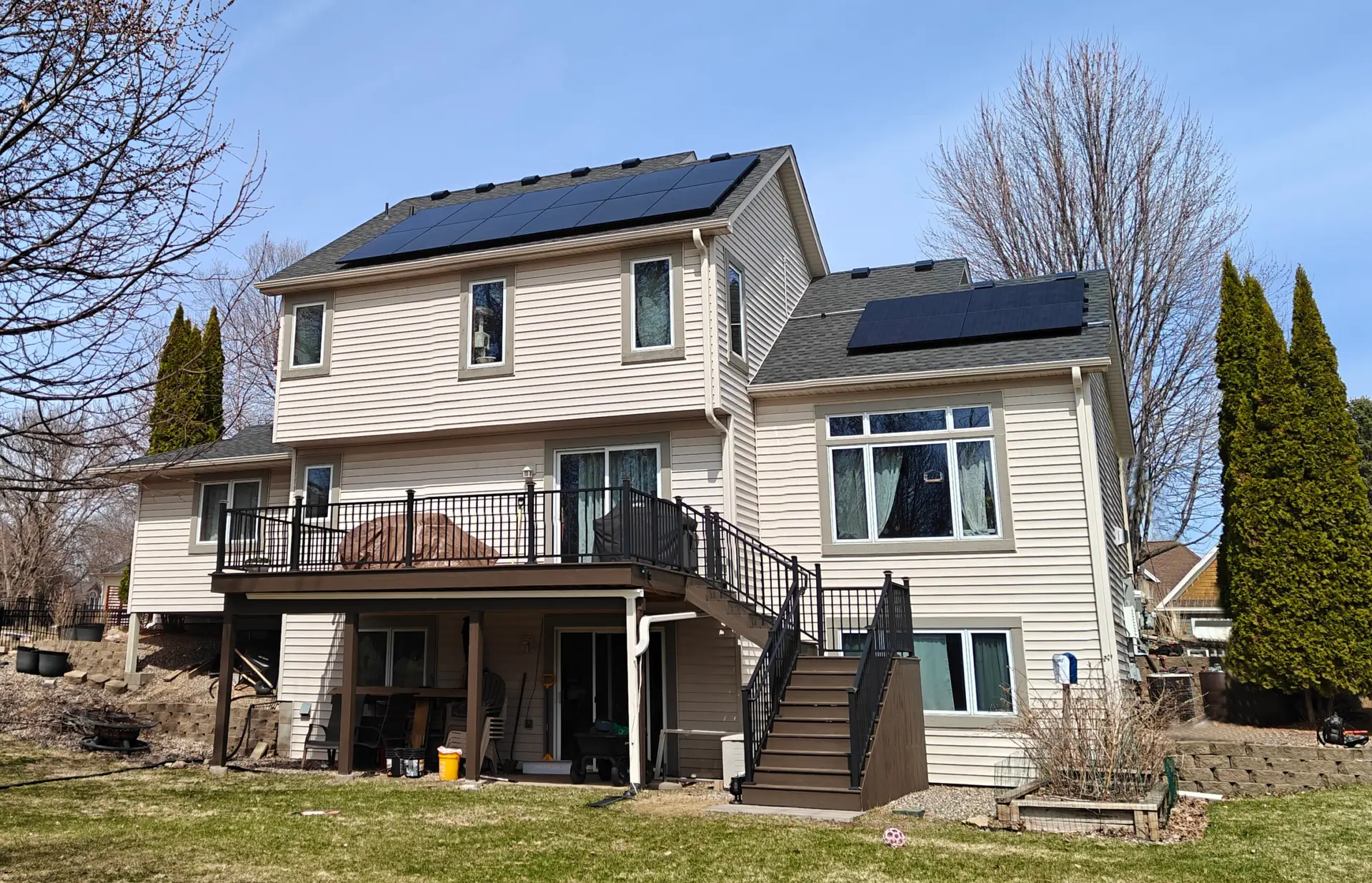
Summary: Minnesota’s net metering laws allow homeowners with solar energy systems to earn utility bill credits for the excess electricity their panels send back to the grid. Understanding how these credits work can help homeowners maximize savings, improve long-term solar ROI, and reduce dependence on traditional utility power.
One of the largest advantages going solar has over fossil fuel energy is the ability to make money off of your system. This process is called net metering. In Minnesota, your utility provider must offer this opportunity to homeowners with solar energy systems.
If you’re considering installing a residential solar energy system, then you need to understand net metering. It’s an important part of evaluating your long-term return on investment.
What is net metering?
Net metering is a billing arrangement between you and your electric utility company. Here’s a quick look at the basic idea.
- Your solar panels generate electricity during the day.
- Your home uses the electricity it needs first.
- If you produce more electricity than your home is using, the extra energy is sent back to the utility grid.
- In return, your utility provides you credits that can offset future electricity usage.
In other words, net metering allows you to ‘bank’ excess solar production, send it back to your utility provider, and get credits on your bill to use later.
Does net metering lower my electricity bill?
Yes, net metering can significantly reduce electricity costs over time. Potential benefits include lower monthly utility bills, faster solar payback periods, better long-term return on investment, and greater protection from rising utility rates.
TruNorth Solar will work with you to size your solar energy system to offset a large portion of your annual electricity usage, while staying within Minnesota’s sizing guidelines of no more than 120 percent of annual on-site energy consumption (in other words, you can’t turn your home into a solar energy farm).
How does my extra solar energy flow back to the grid?
Most homes use more electricity during some parts of the day than they do others. For example, your electricity usage is likely higher in the evening than it is in the middle of the day when you’re at work. While your energy use is lower during the day, these are the peak hours for solar energy production.
When this happens in a home with net metering, the extra electricity flows through your meter and back to the grid. Your utility company tracks how much energy is coming out of your home and applies credits to your utility account according to their rate structure. If you want to get into the weeds, you can download sample rate books here.
How do net metering credits work in Minnesota?
Minnesota has one of the more solar-friendly net metering laws in the Midwest. The state’s compensation rules vary based on the size of your system, the type of utility (i.e. public, municipal, or cooperative), and the rate structure you choose as the utility customer.
Let’s use a residential system under 40 kW as an example, as most residential solar energy systems fall under this category. Homeowners with a system of this size may qualify for:
- average retail utility energy rate compensation.
- bill credits applied to future utility usage.
- direct payment options in some cases.
The bottom line? Compensation for the energy you produce and send back to the grid can offset the cost of any electricity you need to purchase in the future.
Is net metering different from net billing?
Under Minnesota law, utilities can offer net metering or another framework called net billing. The net metering calculation is straightforward: find the difference between what you use and what you send back to the grid, and get credits for that difference on your bill.
In net billing, the electricity you send back to the grid is compensated separately at a rate the utility company defines. Both of these options offer value to you, but the rate differences can affect how quickly your solar energy system pays for itself. Sound complicated? Don’t worry. At TruNorth Solar, we’re experts in these solar incentives and will help you understand what you can expect for your system.
Can I participate in net metering if I have solar battery storage?
Typically no, but that’s not necessarily a bad thing. With battery storage systems, excess electricity is sent to your batteries, not back to the grid. While you won’t get credits for your extra electricity on your utility bill, you won’t need to rely on the grid to power your home at night or during the winter when your solar panels aren’t producing as much.
Minnesota’s net metering policies make residential solar more financially attractive by rewarding you for the extra energy you generate. TruNorth Solar can help you understand how net metering works and design a system to take advantage of this incentive. Get in touch with our team today to get your project started.
Net Metering FAQs
What is net metering?
Net metering is a utility billing arrangement that gives solar homeowners credit for excess electricity their system exports to the grid when production exceeds household energy use.
How do solar credits appear on my utility bill?
When your system sends extra electricity back to the grid, your utility tracks it and applies credits to your account, which can offset future electricity usage charges.
Does Minnesota have statewide net metering laws?
Yes. Minnesota has statewide net metering policies that apply to many solar customers, though compensation structures can vary depending on your utility provider and system size.
Can net metering eliminate my electric bill completely?
In some cases, a properly sized solar system can offset most or nearly all annual electricity usage, though homeowners may still see basic utility service fees or seasonal variations in billing.