
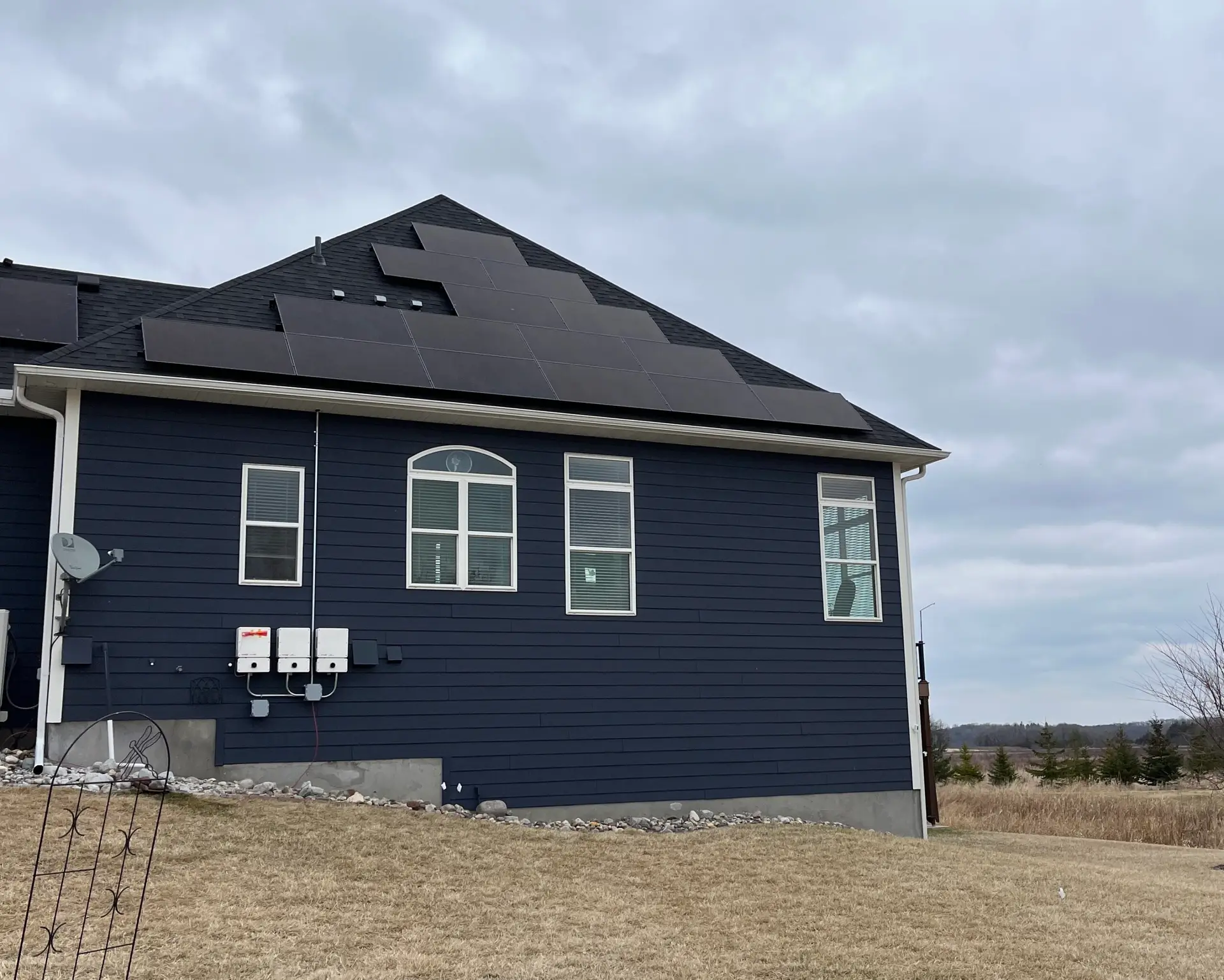
Summary: Understanding your home’s solar potential helps you estimate how much electricity your system could generate and how much you could save on your energy bills over time. By evaluating factors like system size, net metering benefits, and long-term return on investment, TruNorth Solar can help you make an informed decision about going solar.
Thinking about going solar this year? That’s great! Not sure where to start? Let us help!
One of the first questions you might have is how much energy (and savings!) your home can actually generate with solar. Understanding your home’s solar potential helps you estimate your electricity savings, determine the right system size for your property, and evaluate the long-term financial benefits you may enjoy.
For homeowners in Minnesota, evaluating solar potential is an important first step toward your investment in renewable energy, lower electricity bills, and energy independence.
What Determines My Home’s Solar Potential?
Every home’s solar potential is different and is affected by several different factors. Let’s take a closer look at some.
Sunlight Exposure
Sunlight exposure influences your home’s solar potential the most. Homes with strong, consistent sun throughout the day produce more electricity.
Roof Orientation and Tilt
The orientation of your roof affects how much solar potential your home has. In Minnesota, south-facing roofs typically capture the most sunlight. East or west-facing roofs are strong runners-up.
Shading
Trees, chimneys, and nearby buildings all create shade, which can reduce your home’s solar potential. Sometimes, trimming or removing trees can increase solar potential.
Roof or Yard Space
If your roof does not offer optimal solar potential, perhaps a sunny space in your yard does. The larger your roof footprint or acreage, the greater potential for solar output.
Household Energy Use
Finally, your family’s average monthly electricity consumption will determine the ideal solar energy system size. If your family sips electricity, you can get away with a smaller system. If your family is a heavy consumer, however, a larger system would be required.
Sizing a Solar Energy System for My Home
Solar energy systems are not one-size-fits-all, which is a good thing (please don’t let anyone tell you differently). Your system should be designed to match your home’s solar potential and your family’s specific energy needs. This ensures that your system adequately covers your needs and offers you potential savings.
When we evaluate your home for system size, our team will look at:
- your average annual electricity consumption.
- the space available to install solar panels.
- the efficiency of the panels we are recommending.
- local sunlight conditions and your sunlight exposure.
A residential solar energy system size typically ranges between 5 kW and 15 kW, though the exact size depends on your energy goals. Some homeowners want to offset most or all of their electricity use, while others just wish to supplement grid power. What we recommend for you will take your energy goals into account.
How Solar Reduces My Electricity Bills
Solar panels generate electricity for you to use in real time. With battery storage, you can sock away energy to use later. This reduces the amount of power you need to purchase from your utility provider, lowering your monthly utility costs.
Historically, electricity rates continue to increase over time, as we’re currently seeing. Going solar can protect you against rising rates and provide growing energy bill savings year after year. And, you’ll gain greater control over your household energy expenses.
A Note on Net Metering
One of the biggest advantages going solar has over conventional energy sources is a billing credits system called net metering.
Here’s how it works:
- During sunny hours, your panels generate lots of electricity, often more than your home uses.
- Excess energy flows back to the utility grid.
- In exchange for this energy, your utility company gives you credits for that extra power.
- You can use these credits later when your system isn’t producing as much electricity, like at night or during the winter.
Net metering helps you maximize the value of every kilowatt-hour your system produces.
Evaluating My Long-Term Return-on-Investment in Solar Energy
Did you know a typical solar energy system can last 25 years or more? So, installing one is a long-term investment that can deliver decades of financial benefits (and Earth-friendly green energy!).
So, how soon can you expect your system to pay for itself? That depends on a few factors (upfront cost, electric rates, production, net metering), but it’s usually somewhere around 10 years. And while that might seem like a long time, if your system performs for 25 to 40 years, you’re looking at 15 to 30 years of essentially “free” electricity after the system pays for itself. And as electric prices rise, you’ll enjoy increased savings.
Understanding your home’s solar potential helps you make confident and informed decisions about investing in renewable energy. Before taking the leap, our team can help you understand your property’s sunlight exposure, estimate your system size, and explain how you can take advantage of net metering or battery storage.
The TruNorth Solar team always works on your behalf to uncover any and all potential savings opportunities, like state and local incentives, as well as rebates and other programs through your utility provider.
Working with an experienced, local installer like TruNorth Solar can help you accurately assess your home’s potential and design a system that delivers valuable renewable energy and long-term savings. Get in touch with our team today to get your project started.
Solar Potential FAQs
How do I know if my home is a good candidate for solar?
A home that is a good solar candidate typically has strong sunlight exposure, limited shading, and enough roof or yard space for panels. A professional solar assessment from TruNorth Solar can evaluate these factors and estimate your potential energy production.
How much of my electricity bill can solar offset?
This depends on your system size and energy usage, but many homeowners install systems that offset a significant portion (or even all) of their annual electricity consumption.
What happens if my solar panels produce more electricity than I use?
With net metering, excess electricity your system generates is sent back to the grid and credited to your account, helping offset electricity costs when your panels aren’t producing. If you have a battery system installed, it can store excess energy until your home needs it.
How long does it take for a residential solar system to pay for itself?
Payback timelines vary based on installation cost, production, and local electricity rates, but many systems pay for themselves within ten years while continuing to generate savings for decades after.