
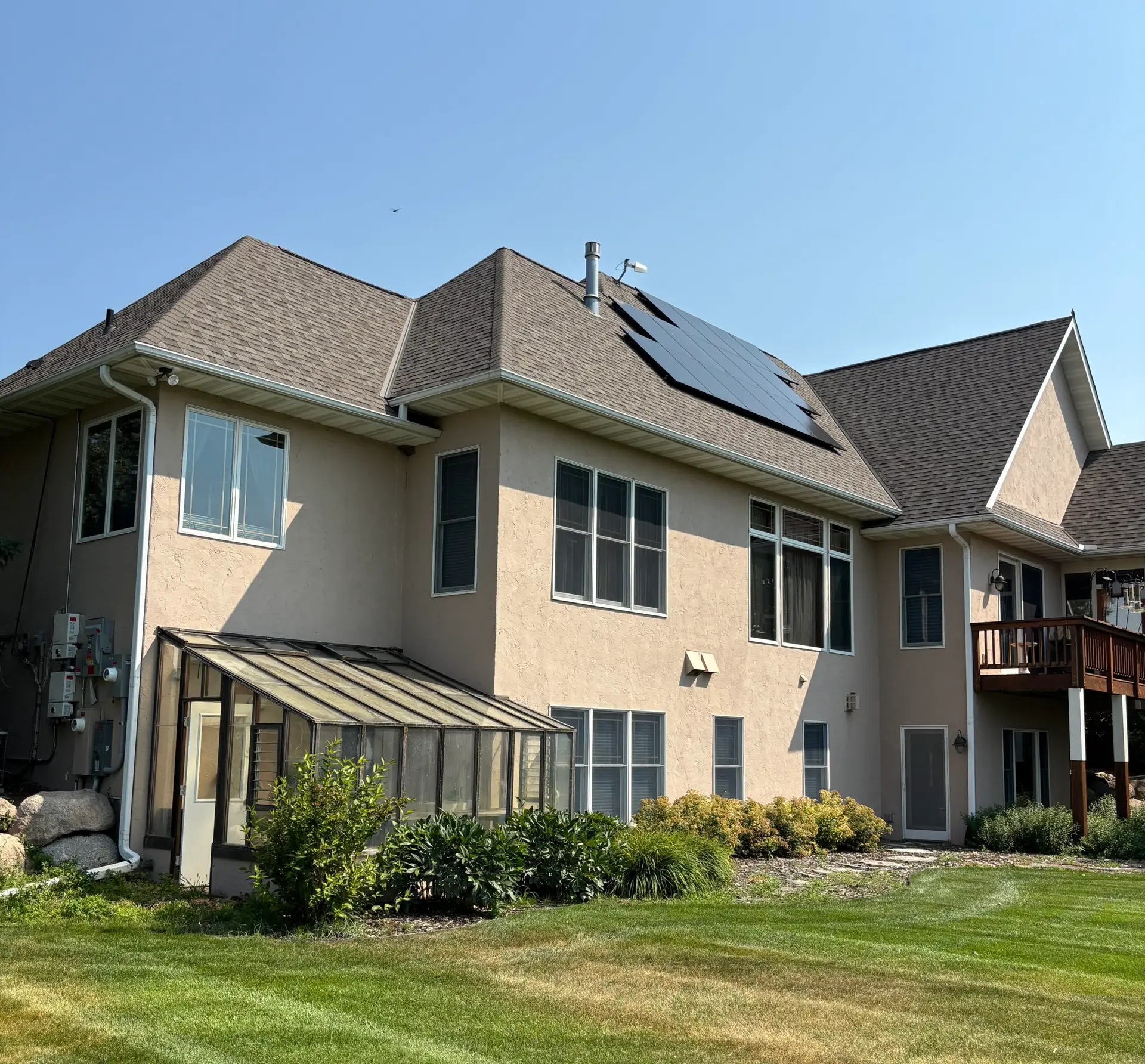
Summary: Heat can slightly reduce the efficiency of solar panels, inverters, and battery storage systems, but it does not stop them from producing energy or significantly impact long-term system value. With proper equipment selection, installation, and ventilation, solar energy systems perform reliably through Minnesota’s hot summers and all other seasons.
Solar panels are designed to withstand the elements. In Minnesota, that means snow, ice, wind, hail, rain, cold, and yes, even heat. Like any other piece of electrical equipment, solar panels, inverters, and battery storage systems can be affected by extreme heat.
Understanding how heat affects your solar energy system can help you set realistic expectations for summer performance and recognize why proper equipment selection, installation, and ventilation matter.
How Does Heat Affect Solar Panels?
You might think that the hotter it is, the more energy your system will produce. After all, solar panels need sunlight to generate power. But while more sunlight generally means more production, higher temperatures can actually reduce a panel’s efficiency.
At the factory, solar panels are tested under standardized conditions. Their electrical output typically decreases as the temperature rises above those conditions. This is known as the panel’s temperature coefficient.
Your panels don’t stop working on hot days. In fact, a hot, sunny summer day could be one of your system’s most productive days because there are more hours of sunlight available. However, due to the temperature coefficient, if that day had been a tad cooler, your panels would have been even more productive. It’s the amount of hours your panels were exposed to sunlight, not the heat, that increased production.
Mitigating the Effects of Heat on Solar Panels
Proper installation by a trusted, local solar installer like TruNorth Solar is important for maintaining solar panel performance. We know that we need to leave space between the modules and the roof to allow air to circulate underneath the panels. Airflow helps dissipate some of the heat that builds up around the panels.
When it’s time to choose your panels, our expert team can help you understand the efficiency ratings and temperature coefficients of your option so you know you’re getting the right panels for your home and exposure.
Does Heat Affect Solar Inverters?
In a word, yes. Your inverter does the necessary work of converting DC electricity from your panels into AC electricity your home can use. Like other electronics, solar inverters generate heat while in operation. Adding high outdoor temperatures to that internal heat can make it more difficult for the equipment to maintain optimal performance. In extreme conditions, an inverter may reduce its power output to protect its internal components from overheating.
To protect your solar inverter from heat, take care with where you place it. We will identify an appropriate location that provides adequate ventilation and protects the equipment from unnecessary heat exposure. In other words, a nice, shady spot out of the sun.
Can Heat Affect Solar Battery Storage?
Temperature management is a particular concern if your solar energy system includes battery storage. Batteries contain electrochemical components that perform best within a specific temperature range. Excessive heat accelerates degradation and can shorten battery life over time.
This is why most systems include features that monitor temperature and help you moderate temps to keep the battery within an appropriate operating range. These features include internal monitoring systems, cooling or ventilation systems, and automatic performance adjustments. Additionally, the TruNorth Solar team will likely recommend a protected or temperature-controlled location to install your battery system (cold winter temps factor in here, too).
Does Heat Reduce the Overall Value of Solar?
Nope! Temporary loss of efficiency due to heat isn’t a major factor in your system’s ROI. Total sunlight hours, panel orientation, shading, system size, and household electricity consumption all play larger roles in the production you get out of your system. These are all considerations that we’ll review with you during the planning stages of your project, so we design the most efficient and productive system possible.
The key is to look at your annual energy production rather than focusing on how your system performs day to day, particularly on hot afternoons.
Solar energy systems are designed to withstand everything our Minnesota climate throws at them. Over the summer, heat can slightly reduce panel efficiency, but longer days and abundant sunlight make up for that effect. Temperature is just one piece of the solar production equation.
If you’re considering solar for your Minnesota property, TruNorth Solar can help you evaluate your energy needs and design a system with equipment suited to your property and our local climate. Get in touch with our team today to schedule a professional assessment of your energy use, evaluate your property, and identify ways to offset the upfront costs.
Solar Energy System and Heat FAQs
Do solar panels work better in hot weather?
No. While solar panels need sunlight to generate electricity, high temperatures can actually reduce their efficiency. They often perform best in bright, sunny conditions with more moderate temperatures.
How does heat affect solar inverters?
Solar inverters can get hot, but have features to prevent overheating in extreme temperatures. Extreme heat may cause them to temporarily reduce power output to protect internal components. Placement in a shaded, well-ventilated area helps prevent this issue.
Can high temperatures damage solar batteries?
Yes, excessive heat can accelerate battery degradation and shorten lifespan, but most modern battery systems include temperature controls and are installed in protected or temperature-controlled locations to prevent damage.
Does hot weather reduce the value of solar energy systems?
No, a solar energy system’s value is based on overall annual energy production, not short-term performance. Longer summer daylight hours typically offset any minor efficiency losses caused by heat.